Go Goa Gone

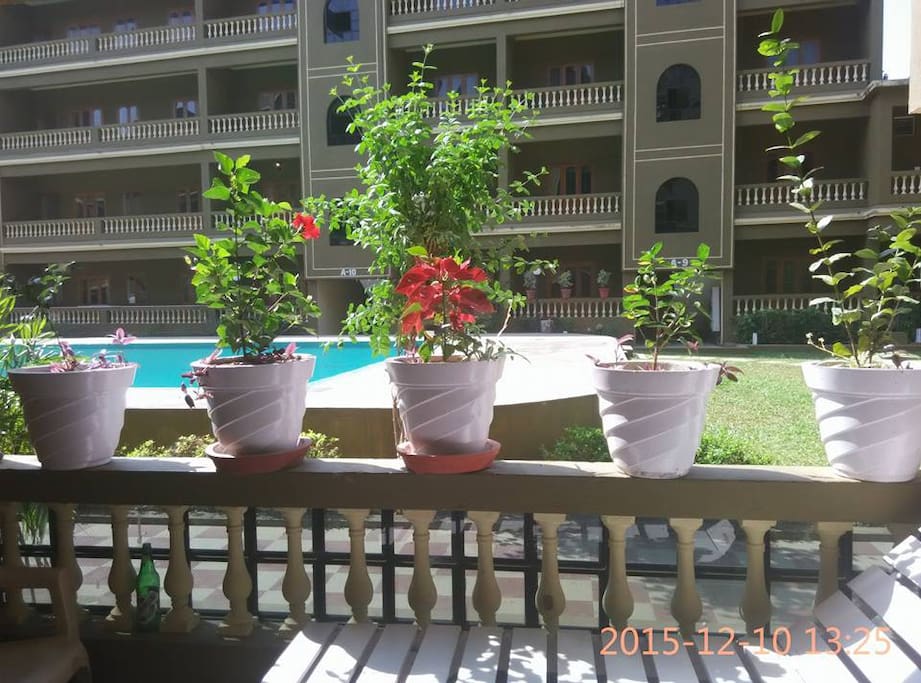
Poolside 1 BHK Apartment in Resort

Siolim, Goa, India
Serene Siolim- Gateway to the pristine beaches of North Goa at Tropical Dreams Resort with Lush green surroundings Ground Floor across the biggest swimming pool in Goa is furnished with SplitAC Ref...
Vacation Rentals in Siolim

Thursday, September 2, 2010

Hinduism and pluralism By Padma Kuppa, Interfaith activist and contributor to Patheos.com

Hinduism and pluralism By Padma Kuppa, Interfaith activist and contributor to Patheos.com

(Patheos.com has just launched a new eleven-week series on the Future of Religion. We begin with the Future of Hinduism. See the full schedule here.)


Writing on the Future of Hinduism is something very difficult to do, raised as I have been with an understanding that faith is eternal, without beginning or end, and that my faith, Sanatana Dharma, is not an "ism" as we call it today. And I also struggle since I am no religious scholar who can spout the Vedas, but a simple middle-class (middle-aged) woman torn by the lack of pluralism and the rise of fundamentalism in my community, my countries (of birth and citizenship), and my world. And yet I am a Hindu American raised with a strong consciousness of Hinduism's spiritual and philosophical strengths, which inspire both my activism and acceptance of what's been handed to me in life.

I am appalled by the nativist and Tea Party mentality in my nation, the lack of civil discourse across every continent. I read of Professor Sheldon Pollock at Columbia University, who has said, "Colonialism nearly killed India's capacity to know its past; globalization threatens to destroy its will." I see with dismay the rise of Bobby Jindal and Nikki Haley, who deny their Dharmic roots, and others like them who spew exclusivist messages. I am troubled by aggressive proselytization in India and the unacceptable retaliation, and worried about the plight of Bhutanese refugees in America, and Hindus from Bangladesh and Pakistan. I am worried whether a generation of Hindus gobbled up by greed and globalization will be able to pass on values to their children. So I know that the world's Hindu community has far to go and much to do -- along with everyone else on the planet. The whole earth is one family -- so say the Hindu holy scriptures, the Vedas (Vasudhaiva kutumbakam).

But I am sure that Hinduism, the complex group of belief systems that the word represents, will have a profound impact on the world in the coming years. Of the six philosophical systems in Sanatana Dharma -- outlined by Heinrich Zimmer as the Six Systems or Darsanas (Kapila's Sankhya, Patanjali's Yoga, Jaimini's Mimamsa, Kanada's Vaisesika, Gautama's Nyaya, and Vyasa's Vedanta) -- the Mimamsakas held that the world remains essentially the same all through the years; history repeats itself. The clash and clang of religious fundamentalism being reenacted today has caused untold suffering before. The invasions of Iraq and Afghanistan can be seen as today's version of imperialism, a belief that one group has the answer to everyone else's problems. But sages and seers have come throughout the ages to revitalize Sanatana Dharma, and many other faiths and bring a period of calm. Similarly, Hindus in America and India and everywhere in between will step forward to help face the challenges of our times, and will be helped by those who understand that pluralism is the answer.

Hinduism has no founder and is defined by absolute freedom of faith. America's Founding Fathers defined a revolutionary formula (the First Amendment) that promoted faith by leaving it alone. Hindus are inspired by an inward pioneering spirit, Americans by an outward one, and Hindu Americans like me are both a synthesis of and a balance between these opposing pulls. Hinduism's future lies in listening to these contrasting voices -- within and without, while living in the moment. Hindu Americans will continue discovering ways to put our faith into action, becoming karma yogis, through civic engagement, social entrepreneurship, and more. Sadhana -- a practice, a quest for perfection, seeking moksha (liberation) -- is an essential part of being Hindu: we, the faithful, "never graduate," as my temple priest Sri V. Janaki Rama Sastry recently explained. Our to-do list is like our faith -- without beginning or end.

As Hindus in America build their houses of worship and find meaning in seva (selfless service), they will look to their faith to help revitalize the pluralism established by the U.S. Constitution for the republic in which we live. They will also look beyond their shores to advocate for those in need, continuing to inspire people to understand that there is more than one way to the mountaintop. In order to do all of this, Hindus must turn to the fundamentals of Hinduism found in the Bhagavad Gita, the Ramayana, and other works of faith to help create peace in the world and their own lives.

Padma Kuppa is a writer, IT professional, community activist, wife and mother working to build a more pluralistic society. She is a member of the Hindu American Foundation's Executive Council. Views expressed here are the personal views of Ms. Kuppa, and do not necessarily represent those of the Hindu American Foundation or of any organization of which she is a part. Her interfaith involvement includes Troy Interfaith Group, an organization highlighted by Harvard's Pluralism Project, WISDOM, and the Interfaith Leadership Council of Michigan. She blogs at padmakuppa.blogspot.com and contributes to the Hindu Portal at Patheos.com

BY DAVID CHARLES  |  JUNE 28, 2010; 12:58 PM ET 


I think what Padma is trying to get at is that the denial of the Dharmic roots and the conversion to the mainstream religion is a very possible future for those who follow a Dharmic or in this case, a non-Christian religion. The precedent that Haley & Jindal have set is a very real future for Hinduism and other Dharmic faiths - the denial and disassociation from them.

Instead, we as a country, as Americans, should try to foster religious diversity rather than succumb to Christian hegemony. Jindal's and Haley's rise in American political and social scene is nearly unprecedented and may indicate to the younger generation that such disassociation is the only way to rise "to the top" in American society. Unfortunately, we have yet to see their Hindu / Sikh / Jain / Buddhist counterparts (i.e. who is a H/S/J/B governor in the US?)

Additionally, many supporters (i.e. Tea Party) of these conservative politicians spew messages of hate, exclusion, and oppression. By accepting the support of such people, Jindal and Haley, are, intentionally or not, spreading those messages to immigrant, people of color, and other marginalized communities. They may be internalizing these messages as well (i.e. immigrants are not good for the country, racism does not exist, etc.).


A rich and strange metamorphosis: Glocal Hinduism By Loriliai Biernacki

A rich and strange metamorphosis: Glocal Hinduism By Loriliai Biernacki
University of Colorado and Patheos.com Contributor


(The following essay was published in the Future of Hinduism Series at Patheos.com, part of an eleven-week summer series on the Future of Religion.)

As we move into the 21st century, with a shrinking world, an entangled economy, and instantaneous communications with the other side of the planet, religious life is changing as well. Religious groups are able to meet the needs of adherents far away and minister to communities separated spatially from each other. For Hinduism, this has meant especially that a diasporic community has been able to reconnect with its roots far away. An engineer living in Denver, Colorado in the U.S. can offer a puja online at the famous temple for Venkateshwara and receive his or her prasad by mail from the temple in Tirupati. Hinduism is becoming global.

As a religion, historically Hinduism has been very much about place. Different deities are associated with different places lending traditional Hinduism a flavor of the local. As this shifts via a new internet interconnectivity, the local will move more toward the "glocal," a kind of proliferation of particularities, particular Gods, particular practices among communities that might have not ever had any access to these new, imported Hindu perceptions -- and at least for the West, beckoning a rich and strange metamorphosis.

What this means for the future of Hinduism is a coming variety of permutations, only loosely aligned under the rubric of "Hinduism" -- which itself as a religious tradition, both in terms of the word "Hinduism" and of the practices associated with this word, has been for some decades understood to function as indeed a kind of generalized rubric, a placeholder for a somewhat diverse set of traditions associated with different saintly or charismatic figures and different deities. In this sense Hinduism is spreading and will continue to spread in the future all over the globe. However, it will spread in a way that leaves behind the proper name, the box that classifies it as "Hinduism" per se.

The careful cultural observer will recognize the traces Hinduism leaves. For instance, one can see this happening already with the phenomenon of yoga. Yoga is becoming increasingly a worldwide practice, no doubt particularized by a variety of modifications, as Raja Yoga, the Bihar School of Yoga, Iyengar yoga, Astanga yoga, with Indian-American cross-overs like Bikram's "hot yoga," and again, with more hybridized American variations such as Forrest Yoga, TriYoga, and Anusara Yoga. The roots of yoga are clearly Hindu, yet as it makes its way across the globe, its roots are obscured. It is becoming a pan-global phenomenon.

Likewise, Hinduism's philosophical underpinnings -- the ideas of karma and rebirth, notably -- are increasingly pervading American consciousness, and this spread of ideas will increase in the future. As a case in point, a few months ago I chanced upon Lisa Miller's column in the widely read magazine Newsweek, where she opines that Americans are becoming Hindus ideologically. She tells us that an astounding number of Americans now believe in reincarnation. This conceptual, indeed cosmological, importation from Hinduism is seeping indelibly into the American psyche. Even a percentage of self-identified Christians have little difficulty incorporating this Hindu notion. Similarly, the word and concept of "karma" is so commonly parlayed in everyday conversation that its Hindu origins no longer even register, as the concept finds its way across wide ranges of socio-economic circles and in all sorts of milieus.

In some sense, the trace of Hinduism as it moves across the globe in the future is as a kind of meme, a conceptual and evolutionary hypothesis. As such, it proposes a restructuring of our old habits of thought. It functions as a representative of what the West with its Cartesian mastery of the world lacks. As meme, this spread of Hindu conceptual tenets augurs a more healing and soulful alternative to the mechanization of our lives, our bodies, our minds. It promises a relief from the heavy burden of a soulless capitalism, to what we find in classical Hindu philosophical texts described as the "Law of Fishes" (matsya nyaya), a cutthroat and unsatisfied material competition in the world.

Besides this, Hinduism as de-nominalized meme of our future is a prelude to a future that Hinduism is already comfortable with. Our own increasingly plural world might take some solace, find a steady ease in the Hindu comfort with the multiple -- multiple Gods, multiple practices, and simultaneous multiple ontological structures of monotheisms, monisms, polytheisms, and panentheisms. In this sense, the future of Hinduism suggests a kind of opening to a global world in a way that sidesteps the vision of a one-world government or one-world ideology. It proposes instead a world model without hegemonic center, linked by a thread of cosmology, multiplicity instanced as network, a seamless interconnectivity that echoes a conceptual cosmology from Hinduism's past into our own global and glocal future.

Loriliai Biernacki is Associate Professor of Religious Studies at the University of Colorado in Boulder. She teaches and researches the religious traditions of India, especially Hinduism, Tantra, and the 11th-century Indian philosopher Abhinavagupta. Her research interests particularly address issues of gender and critical theory. Her research also deals with contemporary representations of Hinduism, including Hindu diaspora movements and Hindu syncretist movements in the U.S. She is the author of Renowned Goddess of Desire: Women, Sex and Speech in Tantra (Oxford, 2007).

BY DAVID CHARLES  |  JULY 1, 2010; 6:44 PM ET 

Wednesday, September 1, 2010

http://www.financialexpress.com/news/vrindavan-celebrates-janmashtami-with-fervour/675945/

Vrindavan celebrates Janmashtami with fervour

Posted: Wednesday, Sep 01, 2010 at 1758 hrs IST
Updated: Wednesday, Sep 01, 2010 at 1758 hrs IST

Mathura: Amid blowing of conch shells, the famous Radha Raman temple at Vrindaban today reverberated with 'Hare Krishna' as thousands of devotees thronged the premises to celebrate Janmashtami, the birthday of Lord Krishna.

The Banke Behari temple in Vrindaban was decorated with flowers and echoed with 'Nand ke lala ki jai'.

A large number of devotees gathered in the temple courtyard to have a glimpse of 'abhishek' of the Lord with milk, curd, honey and ghee amid chanting of vedic hymns.

After four hours of 'abhishek', prasadam was distributed among the people.

Some of the devotees, including noted musician Pandit Jasraj, got 'vastra prasadam' (the cloth used by the deity at the time of bathing ceremony), the temple priest Dinesh Chandra Goswami said.

While people in Nandgaon and Barsana celebrated the festival today, those in Mathura, Goverdhan, Gokul, Baldeo and Mahaban will be celebrating the Sri Krishna Janmashtami tomorrow.

Security arrangements were put in place and no untoward incident was reported, District Magistrate Dinesh Chandra Shukla said.

The Hindu : Arts / History & Culture : Jordan unearths 3,000 year-old Iron Age temple

AMMAN, September 1, 2010
Jordan unearths 3,000 year-old Iron Age temple

AP

Antiquities chief Ziad al-Saad announces the discovery of a 3,000-year-old Iron Age temple during a press conference in Amman on Wednesday.

The Jordanian antiquities department announced today the discovery of a 3,000 year-old Iron Age temple boasting a trove of figurines of ancient deities and circular clay vessels used in religious rituals.

Antiquities chief Ziad al-Saad said archaeologists unearthed the eighth century BC sanctuary at Khirbat Ataroz near the town of Mabada, some 30 km southwest of the capital Amman.

The temple was composed of a main room measuring 97 feet by 43 feet (9 meters by 4 meters), as well as two antechambers and an open courtyard, Mr. al-Saad said.

The sanctuary and its artefacts, hewn from limestone and basalt or moulded from clay and bronze, show the complex religious rituals of Jordan’s ancient biblical Moabite kingdom, according to Mr. al-Saad.

“Today we have the material evidence, the archaeological proof of the level of advancement of technology and civilisation at that period of time,” he said.

The Moabites, whose kingdom ran along present-day Jordan’s mountainous eastern shore of the Dead Sea, were closely related to the Israelites, although the two were in frequent conflict. The Babylonians eventually conquered the Moabites in 582 BC.

Keywords: Khirbat Ataroz, Iron Age temple, Moabites

Prime Minister Manmohan Singh during his visit to the Lord Venkateswara Temple in Tirumala

Prime Minister Manmohan Singh during his visit to the Lord Venkateswara Temple in Tirumala'


SCIENTIFIC MEANING OF SHIVA RATRI :

SCIENTIFIC MEANING OF SHIVA RATRI :

SCIENTIFIC MEANING OF SHIVA RATRI :

Human body is susceptible for the changes in the cyclical motions of the moon and sun.

The impact of these changes are closely documented by the advanced researchers in the field of bio farming and organic farming.

The ascent and descent of the moon have the impact on the growth of the plants and all cellular structures, including on the germination of the plants.

Human body also undergoes very subtle cellular and molecular changes during this time.

Most of the lung and respiratory infections are possible during this time.

According to Ayur Veda the Bilwa Leaves have a power full preventive medicine for all the Respiratory Diseases including the Cardiac Problems.

Using them with hand and smelling the smell of these leaves involves the aroma therapy.

Shiva lingas is found to have a specific property of resonating the cosmic vibrations.

Water has a peculiar property of called colloidal property. This enhances the water molecules to change their bond angles when came in to contact with the cosmic resonances and to increase their energy which then becomes powerful medicine. The abhisheka of the Shiva Lingas is to do this complicated exercises for the benefit of the mankind.

The mantras used in the abhisheka or in the worship are definite energy states which produce a specified quantum of energy if recited. This energy is absorbed by the molecules of he body and they in turn radiate heightened infrared band of energies.

These energies radiated are picked up by the Acu Points or Adharas which distribute the energy for all the systems of the body for the energy correction.

That is the reason why the Rudra Namakam, Chamakam and Mahanyasam and other powerful Vedic Mantras are recited on this Maha Shiva Rathri Day.

Click here for seeing Dwadaslingas and doing Abishekam

Hinduism: Age of the earth according to Vedic chronology

Hinduism: Age of the earth according to Vedic chronology
Age of the earth according to Vedic chronology

“The Hindu religion is the only one of the world’s great faiths dedicated to the idea that the Cosmos itself undergoes an immense, indeed an infinite, number of deaths and rebirths. It is the only religion in which the time scales correspond, to those of modern scientific cosmology. Its cycles run from our ordinary day and night to a day and night of Brahma, 8.64 billion years long. Longer than the age of the Earth or the Sun and about half the time since the Big Bang. And there are much longer time scales still.”

“A millennium before Europeans were willing to divest themselves of the Biblical idea that the world was a few thousand years old, the Mayans were thinking of millions and the Hindus billions.”
Dr. Carl Sagan, (1934-1996) famous astrophysicist

According to Vedic chronology, Hinduism describes the age of the earth in detail. Details can be found in the Bhagwat Maha Purana or Bhagwatam.

Our earth is part of a material manifestation called a BRAHMANDA, a group of interrelated but separate regions or abodes called lokas, each conditioned by its respective quality of material time and space. In other words, what would be equivalent to one year in one of these lokas may be correspond to 12,000 of our earth years.

Most of our brahmandais subtle and imperceptible to us. Our earth planet is part of this configuration. A brahmanda is basically comprised of one planetary system with an earth inhabited by living beings, a sun and the above described regions.

According to the chronology of Hinduism, the divine personality who creates this with God‘s grace and who oversees it is called “Brahma” (the creator). This is a seat or position located in the subtle or celestial regions of a brahmanda (Brahma – name of the creator), anda – his spherical creation, literally ‘egg’.)

In one galaxy, there is an inestimable number of brahmandas (earth planet + other interrelated and subtle abodes) and their corresponding Brahmas.

The supreme creator or original inspiration for the creation of the entire universe is God.

How old is the earth? The earth came into existence with Brahma and will exist as long as he does. As long as Brahma lives, his creation continues to exist. When his term ends, this brahamanda will enter into absolute dissolution.

In between, there are periodic episodes of dissolution and creation of a lesser order, in which the earth enters a period of dormancy, when all life ends, but is again restored. Brahma is the personality that observes and maintains this schedule.

A soul incarnates in a particular brahmanda and remains there until its end. After this, that soul will enter another brahmanda. This has happened eternally for all the souls and will continue eternally. Only the soul who becomes liberated from maya is exempted from this.

We can calculate the age of the earth from the age of Brahma. The Vedic chronology of Hinduism uses a base unit of calculation called a chaturyugi. This is comprised of 4 yugas (periods of time). Their lengths and corresponding names are:

1,728,000 years = sat yuga
1,296,000 = treta yuga
864,000 = dwapar yuga
432,000 = kali yuga
——————————————————————————–
4,320,000 years = one charturyugi (one 4-yuga cycle)
——————————————————————————–
1000 chaturyugis = one day of Brahma
1000 chaturyugis = one night of Brahma
8,640,000,000 years = one full day (24 hours) of Brahma
100 celestial years = age that Brahma lives to
50 celestial years = Brahma’s current age, or,
155.5 trillion years = the current age of this earth. bold