Go Goa Gone

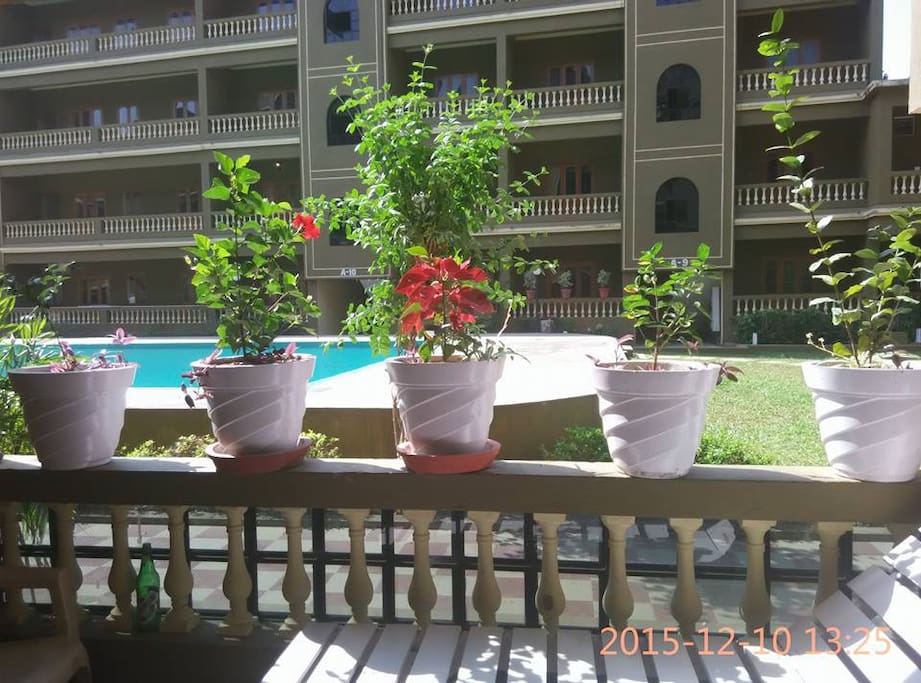
Poolside 1 BHK Apartment in Resort

Siolim, Goa, India
Serene Siolim- Gateway to the pristine beaches of North Goa at Tropical Dreams Resort with Lush green surroundings Ground Floor across the biggest swimming pool in Goa is furnished with SplitAC Ref...
Vacation Rentals in Siolim

Monday, August 23, 2010

Hindus welcome endorsement of yoga in a Catholic publication Published: Monday, Aug 23, 2010, 17:43 IST Place: Nevada | Agency: ANI


Hindus have welcomed an article in “US Catholic” magazine which said: “Yoga had completely transformed my Catholicism”.

Titled "Om-schooled: How Yoga can influence your Catholic prayer", this article, appearing in the September 2010 issue of the magazine, further says: "Catholics can take a lesson from the Hindu tradition of yoga when it comes to praying with body, mind, and spirit".

Noted Hindu statesman Rajan Zed, in a statement in Nevada (USA) today, said that Yoga, referred as "a living fossil", introduced to the humanity by Hinduism, was a world heritage, and we were pleased when it helped other faith traditions achieve their goals.

Article, written by MM Hubele, further states: "As Catholics we believe that externals matter. What we do with our bodies impacts what we experience within our souls. We might not be trying to rein in unruly thoughts so as to reach liberation, but we certainly can benefit from a physical response to those things we point to as sacred. Our bodies can be used to bring our thoughts into line…But perhaps by learning from our Hindu brothers and sisters we can rediscover an element of our tradition that is as old as the religion itself. Whether it's leaping with joy during worship or extending our arms during a benediction, letting our bodies form our prayer can breathe a freshness into our faith. I may not be thinking of the mountain pose when I'm standing during Mass, but through my study of yoga I've come to rethink what I'm standing for."

Zed, who is president of Universal Society of Hinduism, further said that yoga, whose traces went back to Indus Valley civilization, was one of the six systems of orthodox Hindu philosophy. Codified in Yoga Sutra by Patanjali around 300 BCE, yoga was actually a mental and physical discipline by means of which the human-soul (jivatman) united with universal-soul (parmatman). Swami Vivekananda reportedly brought yoga to USA in 1893.

Rajan Zed points out that some sages have described yoga as the silencing of all mental transformations, which leads to the total realization of the Supreme Self. Some have used yoga attempting to gain liberation by removing all sensory barriers.

According to Patanjali, yoga is a methodical effort to attain perfection, through the control of the different elements of human nature, physical and psychical. Yoga is based on an eightfold path to direct the practitioner from awareness of the external world to a focus on the inner.

Ancient Hindu scriptures Upanishads were the first yoga writings and Bhagavad-Gita (Song of the Lord), which is a comprehensive yoga-sastra (treatise on yoga), talks about karma yoga, jnana yoga and bhakti yoga, Zed adds.

"US Catholic", with Rev John Molyneux as the editor, is an award winning magazine published by Claretians, a Roman Catholic religious community of priests and brothers who are dedicated to the mission of living and spreading the Gospel of Jesus.

Claretian Publications in Chicago (USA) claims to be one of the country's most respected Catholic publishers of magazines and newsletters.

Tuesday, August 10, 2010

According to the text of Mahabharata, the War took place at the juncture of Dwapara and Kali Yuga.

HISTORICITY OF MAHABHARATA WAR
source:  http://www.indianresurgence.com/history1.htm
by Dr. RadheyShyam Brahmchari

In January 2001, Indian History Congress was holding its Annual Conference at the Alipur Campus of the University of Calcutta and at the concluding session of the said Conference the Nobel Laureate economist Dr. Amartya Sen, while addressing the delegates, said that Ramayana and Mahabharata do not have any historical value. These two epics are simply mythology and nothing but poets’ fancy. He also said that neither Rama nor Krishna was a historical personality and both of them were simply mythical.

Gandhiji wrote two commentaries on Shrimadbhagavadgita, Anasaktiyoga and Gitabodha, and in the introduction of the former work, he wrote, “Generally Mahabharata is taken to be a historical work. But in my opinion, it is not so. I cannot say that Ramayana and Mahabharata are historical works. They are simply religious works. If you are still inclined to treat them as historical works, then I should say that they are nothing but the history of the Self (Atma). They do not contain what happened thousands of years ago. On the contrary, they are the reflections of what is happening today in every soul”. About Lord Krishna, he wrote, ”Krishna of Gita is the embodiment of pure and divine knowledge, but without having any physical existence. By this the Avatar Krishna is not denied at all, but only it is said that He is mythical”.

It is not difficult to understand that all such utterances of Sen, Gandhi and many other like minded Indians derive inspiration from the Western interpretation of Indian history. Most of the Western scholars firmly believe that our ancestors grossly neglected writing history and what we claim to be our history is nothing but mythology. So M. Winternitz in his History of Indian Literature writes, “History is one weak spot in Indian literature. 

It is, in fact, non-existent. The total lack of historical sense is so characteristic that the whole course of Sanskrit literature is darkened by the defect”. The renowned German scholar Max Muller, in his History of Ancient Sanskrit Literature, writes, “No wonder that a nation like India cared so little for history”. “With regard to history, the Hindus have done really nothing but romances from which some truth may occasionally be extracted”, says another Western scholar Major Wilford. These scholars refuse to accept Ramayana, Mahabharata and the Puranas as historical works as there are no mention of year and dates of the events described therein.

But people of this country firmly believe that Ramayana, Mahabharata and the Puranas are their history and not simply epics or poets’ fancy. So Dr. S. Kalyanaraman, the director of the Chennai based Saraswati River Research Centre, says that the historicity of the events described in Ramayana and Mahabharata is validated by two evidences: one is based on tradition and the other is based on jyotisha, or planetary configurations and other celestial events narrated along with mundane events described in those epics, which may be called sky epigraphs.
           
So far tradition is concerned, people of this nation believe that Lord Rama was born on the day of Ramanavami and  Lord Krishna was born on the day of Janmastami and so on. In fact, there is a long list of such traditional beliefs such as: Bhishma died on the Bhishmastami day, on the day of Vijaya Dashami, Lord Rama celebrated the day, with His army, as the day of victory after killing Ravana and defeating his army just on the previous day,  on the day of Deepavali, Lord Rama returned to Ayodhya after 14 years of exile and the people of Ayodhya celebrated the day and decorated their houses by lighting lamps and the tradition is still being continued;  the War of Kurukshetra began on the day of Gita Jayanti and so on and so forth.                                                                                         

            It is really strange that the people of Western Garhwal, now in the state of Uttaranchal, observe every year the Duryodhana Festival. There also exists a temple dedicated to Duryodhana where people offer their puja and many believe that the city of Varanavat, where Duryodhana tried to burn the Pandavas alive, was situated in that locality. It is also really striking that people of this country offer water in memory of Bhishma during shraddha ceremony. The point to be highlighted here is that, had all these been poets’ fancy and mythical, the traditions could not have been continued for such a long time.

            The aspect of celestial epigraph, or planetary positions described in these epics, particularly in Mahabharata, undoubtedly shows that the said epics do mention the dates of events described therein, which the Western scholars failed miserably to understand. In Mahabharata alone there are 150 instances where worldly events are mentioned along with the planetary positions in the sky. And, in addition to that, other astronomical events such as occurrence of an eclipse, or appearance of a comet, or rare events like shower of meteorites have been mentioned. A few of such examples may be mentioned below

The Udyoga Parva of Mahabharata narrates that, just before the War, Lord Krishna, in His final peace mission, went to Hastinapur in the month of Kartika. He set out on the day when moon was at the asterism Revati. On His way to Hastinapur, Krishna took rest for a day at a place called Brikasthala, and on that day the moon was at the asterism Bharani. The day on which Duryodhana turned down each and every effort of Lord Krishna to make peace and made the war inevitable, the moon was resting at the asterism Pushya. And the Lord left Hastinapura with Karna, on the day when the moon was yet to reach the asterism Uttara Phalguni. 

As mentioned above,  Karna accompanied Him to some distance to see Him off and  he then described to the Lord the positions of planets in the sky and expressed his apprehension that such a planetary configuration stood for very bad omen: such as large scale loss of life and drenching of blood. Vyasadeva narrated all these planetary positions in as many as sixteen verses as if someone was describing it after visualizing them in the sky. 

It is also well known that during the War, Lord Balarama went on a pilgrimage to holy places along the banks of the River Saraswati and Mahabharata describes the position of the moon during the entire course of pilgrimage. For example, He set out on the day when the moon was at the asterism Pushya and returned on the day when the moon was at the asterism Shravana.

            The Mahabharata also mentions the occurrence of a solar eclipse at the asterism Jyestha and a lunar eclipse at the asterism Krittika, just before the beginning of the War. It also mentions the appearance of a comet at the asterism Pushya, on the 8th day of the bright half of the month of Magha, when Bhishma died. On that day the moon was at the asterism Rohini and it was the day of Winter Solstice. The day on which Ghatotkacha, son of Bhima, died, the moon appeared at the horizon at 2.00 a.m. The epic also mentions the occurrence of a very rare astronomical event that took place prior to the War: three eclipses, two lunar and a solar, within a lunar month of 27 days.

            There is also another continuing tradition in this country that says that the beginning of the present Kali Yuga, Kurukshetra War, death of Lord Krishna and coronation of Emperor Yudhishthira were contemporary events. Famous astronomer Aryabhatta in his celebrated work Aryabhatiyam had accepted the said tradition and used the word “Bharatapurvam” in the said work very often and scholars agree that he used the word to refer to such events that occurred before the Mahabharata War. 

In 1991, Dr. D. Abhayankar and Dr. Ballabh of the Osmania University calculated that the present Kali  Yuga began on 7th February, 3104 B.C.  But  it is  now well accepted by the both Eastern and the Western scholars that the present Kali Yuga began on the midnight of 17th and 18th February, 3102 B.C. And hence it can roughly be said that the Mahabharata War took place nearly 5000 years ago from now.

            Today, man has created a machine called computer which, though most idiotic, can do mathematical calculations at an incredible speed.  According to a popular ad of a computer company, the calculations which Johannes Kepler took ten years to complete, can be done today within minutes, using a computer. It has therefore been possible for the scientists, with the help of this fantastic machine, to determine the dates of ancient events with unthinkable accuracy, using the planetary configurations given in the Mahabharata , as inputs. They have developed so many software for this purpose and to name a few are: (1) Planetarium, (2) Ecliptic, (3) Lode star  and the(4) Panchang Software.                                
    
            In 2003, a two day seminar was held on 5th and 6th January, in Bangalore, on “The Date of Mahabharata War: Based on Astronomical Data Using Planetarium Software”, and a few of the eminent researchers who submitted papers were (1) Dr. S. Balakrishna of NASA, USA; (2) Dr. B. N. Narahari Achar, Department of Physics, Memphis University, USA; (3) Dr. R. N. Iyengar, Department of Civil Engineering, IISc, Bangalore; (4) Dr. S. Kalyanaraman, Saraswati River Research Centre, Chennai and so on. These scientists agree that there does not exist any contradiction between any two descriptions of planetary configurations given in the Mahabharata.

Dr. S. Balakrishna has studied the eclipses, both solar and lunar, described in the Mahabharata and tried to find out the dates of those eclipses using the Lode Star Software. Generally 240 solar and 150 lunar eclipses occur in a century and during the period from 3300 B.C. to 700 B.C. nearly 6000 solar and 4000 lunar eclipses took place, though not all of them were visible from India, or to be more precise, fromKurukshetra. Out of them, 672 were eclipse pairs,  or both solar and lunar eclipses within a lunar month. 

Dr. Balakrishna studied the eclipses those have been mentioned in the text of Mahabharata. In fact, there are mentions of solar eclipses at 8 places in Mahabharata, out of which three of them are very important. Firstly, the solar eclipse that is mentioned in the Sabha Parva. The second solar eclipse which is mentioned in the Udyoga Parva to which Karna tried to draw the attention of Lord Krishna when He was returning from Hastinapur. The third important solar eclipse has been mentioned in the Shalya Parva, that occurred along with two lunar eclipses within a month.  Many believe that there was a total solar eclipse occurred on the 13th day of the War, which has been allegorically mentioned as covering the sun by Lord Krishna with His Sudarshan Chakra.

            The epic Mahabharata has so many other aspects which common people do not know. Firstly, the epic as we see it today containing 100,000 verses was not the creation of Vedavyasa. He composed what was then known as the Jai, containing only 8,800 verses. Later on Rishi Vaishampayana enlarged it to contain 24,000 verses which was then known as the Bharata. Finally Sauti, the son of the suta (the chariot driver) Lomaharshana, gave it present form as we see now, containing 100,000 verses.


            It has been mentioned earlier that just prior to the Mahabharata War, a very rare event of three eclipses occurring within a lunar month took place: a lunar eclipse followed by a solar one and then another lunar eclipse. According to the text of Mahabharata, the solar eclipse occurred just 13 days after the first lunar eclipse. Dr. S. Balakrishna of NASA,  USA, has searched all eclipse pairs, a lunar eclipse followed by a solar eclipse after 13 days, that took place from 3300 B.C. to 700 B.C., using the Lodestar pro-software. 

He found that nearly 672 eclipse pairs have occurred within the said period, out of which 27 pairs have been found to have less than 14 days time gap. And according to Dr. Balakrishna, the eclipse pair of 2559 is the best match with the description given in the text of Mahabharata. But according to Dr. Kalyanaraman, the eclipses occurred in 3067 B.C.- the lunar eclipse on 29th September at the asterism Krittika and the solar eclipse on 14th October at the asterism Jyestha.

              Researcher Dr. P. V. Holay examined 6 planetary configurations given in the Mahabharata and concluded that the War began on 13th November, 3143 B.C. But Dr. K. S. Raghavan and his coworker Dr. G. S. Sampath Iyengar, using the Planetarium software came to the conclusion that the Kurukshetra War began on 22nd day of November, 3067 B.C. (according to the present Gregorian calendar). Professor Dr. Narahari Achar of the University of Memphis, USA, also arrived at the same conclusion using the said Planetarium software. 

Dr. S. Kalyanaraman of the Saraswati River Research Centre, Chennai, found the estimates of Dr. K. S. Raghavan and Dr. Narahari Achar correct and, on that basis, calculated the dates of some other important events of Mahabharata. For example: Lord Krishna, on His final peace mission, set out for Hastinapur on 26th September, 3067 B.C. when the moon was at the asterism Revati. Lord Krishna arrived Hastinapur on 28th September, 3067 B.C., when the moon was at the asterism Bharani. The full moon and lunar eclipse at Krittika occurred on 29th September, 3067 B.C.

The solar eclipse at Jyestha occurred on 14th October, 3067 B.C.
Lord Balarama set out for pilgrimage on 1st November, 3067 B.C.
The War began on 22nd November, 3067 B.C.
Lord Balarama concluded His pilgrimage on 12th December, 3067 B.C.
The winter solstice occurred on 13th January, 3066 B.C.
Bhishma died on 17th January, 3066 B.C.
The comet Mahaghora appeared at the asterism Pushya in October, 3066 B.C.
                       
Finally, it should be mentioned that the said seminar officially accepted that the Mahabharata War began, as mentioned above, on 22nd November, 3067 B.C. So it appears that the Mahabharata War took place, not in Dwapara Yuga but, in the 35th year of the present Kali Yuga. It is not unlikely because according to the text of Mahabharata, the War took place at the juncture of Dwapara and Kali Yuga.

Last year, (2005 A.D.), astrologer Arun Kumar Bansal, using computer software, calculated date of birth of Lord Krishna and it was 21st July, 3228 B.C. So it appears that during the Mahabharata War, age of Lord Krishna was 161 years. At the first sight, it may appear to be absurd. But it should be mentioned here that, according to Hindu scriptures, the normal life span of human beings is 400 years in Krita (or Satya), 300 years in Treta, 200 years in Dwapara and 100 years in Kali Yuga. In fact, during the Kurukshetra War, most of the military top brass of both Kauravas and Pandavas were more than 100 years old.

 To conclude, it should be mentioned here that the discovery of the ruins of the city of Dwaraka by the renowned archaeologist Dr. S. R. Rao, under the Arabian Sea, provides another strong evidence that Lord Krishna and the story of Mahabharata were a reality and not simply poet’s fancy.
Tuesday, August 3, 2010

Himalayan Pink Crystal Salt

I don't use refined white table salt, either. Instead, I use Himalayan Pink Crystal Salt because it contains the full spectrum of 84 minerals and trace elements just like Mother Earth intended. It is an unrefined, unprocessed "raw" salt that's hand-mined from abundant salt caves that were formed 250 million years ago as ocean salt settled in certain geologic pockets around the earth.

Most of the western world thinks of salt as sodium chloride -- a highly refined, processed white substance that's devoid of nutrients. Salt is so devoid of nutrients, in fact, that in the early 20th century, doctors noticed that people who ate white table salt started to suffer chronic degenerative diseases such as goiter. This was caused by the lack of iodine in the salt.

Iodine deficiency, by the way, is the No. 1 most preventable cause of mental retardation. Eating processed salt that lacks iodine, in other words, can cause your offspring to be retarded.

Now what's really interesting about processed table salt is that it's missing over 80 minerals. But they only put ONE mineral back in -- iodine. That's because iodine is the one mineral that causes the most obvious disease (goiter is sort of hard to not notice).

Iodine is a naturally occurring mineral in the ocean. It's abundant in seafood and in real sea salt, but it's completely missing from refined white table salt.

So they started adding iodine to table salt, creating "iodized salt."

But why would you want to eat salt that's been artificially enriched with ONE mineral when you could be eating salt that naturally contains eighty-four minerals?

Himalayan Pink Crystal Salt contains 84 minerals and trace minerals, including iodine!

The way to tell if your salt is really full-spectrum salt is to look at the color. If it's pure white, it's not full-spectrum. White salt is just like white sugar: It's missing the key supporting minerals and nutrients your body needs.

Full-spectrum salt always has a non-white color. Celtic Sea Salt, for example (which is really good salt) has a brownish sandy color. Our Pink Himalayan salt is a sort of sandy rose color. All the truly natural full-spectrum salts are sandy or brownish in color.

Some other things you may not know about full-spectrum salt:

• This product stores for years. It's naturally shelf-stable as long as you keep it relatively dry and unopened. Store in a dark, cool place for longest shelf life.

• Full-spectrum salt is a crucial preparedness item. Your body cannot live without salt, and in a crisis situation, real salt may be very difficult to come by in many areas. Storing full-spectrum salt is not only good for your health today; it's a type of nutritional insurance against future food shortages.

• If you exercise a lot, juice a lot or live in a very hot climate, your body may actually need more salt than you're getting. But processed salt doesn't provide all the minerals your body needs to replenish. Only full-spectrum salt fulfills your body's true salt needs.

• A craving for junk foods is often just a craving for full-spectrum salt. When your body lacks minerals, it urges you to consume more. This is often mistranslated in your mind as a craving for salty snack foods. But consuming full-spectrum salt (in a reasonable amount) can often ease your junk food cravings.

Our Himalayan Pink Crystal Salt comes from the Himalayan Region of the Karakoram mountain range located 400 miles from the Hunza Valley in Pakistan. (http://en.wikipedia.org/wiki/Karakoram)

Our salt is always stone ground. No metal ever touches the salt during grinding. All the salt is extracted by hand from the salt caves (ancient sea bed deposits). No salt from other sources is mixed with this salt. This is 100% from the Karakoram mountain range salt caves.

These salt deposits are roughly 250 million years old, meaning they were deposited long before the earth became polluted with heavy metals, pesticides and PCBs. While there is really no such thing as "organic" salt, this is probably the most pristine salt you'll find anywhere on the planet. Eating this salt is a lot like going back in time and consuming minerals from pre-industrial Earth.

Are you aware of salt sole'? my wife is an ayurvedic practitioner, and we have been consuming a 1/4 tsp of dissolved himalayan pink salt in a glass of fresh water. (spring or well, untreated, as chlorine destroys the ability of water to transport information), this is a wonderful way to get the salt in that we need each day. i have lost all my extra weight, over 100 pounds by eating within my dosha and maintaining a daily intake of pink salt. thanks for the article, you can fing us at www.satyaatraa.com. peace, roy

15 Laws of Life- What You Need to Keep in Mind- From Swami Vivekananda

15 Laws of Life
What You Need to Keep in Mind
From Swami Vivekananda

Live Quotes
Laws of Attraction
1. Love Is The Law Of Life: All love is expansion, all selfishness is contraction. Love is therefore the only law of life. He who loves lives, he who is selfish is dying. Therefore, love for love's sake, because it is law of life, just as you breathe to live.
 
2. It's Your Outlook That Matters: It is our own mental attitude, which makes the world what it is for us. Our thoughts make things beautiful, our thoughts make things ugly. The whole world is in our own minds. Learn to see things in the proper light.
 
3. Life is Beautiful: First, believe in this world - that there is meaning behind everything. Everything in the world is good, is holy and beautiful. If you see something evil, think that you do not understand it in the right light. Throw the burden on yourselves!

4. It's The Way You Feel: Feel like Christ and you will be a Christ; feel like Buddha and you will be a Buddha. It is feeling that is the life, the strength, the vitality, without which no amount of intellectual activity can reach God.

5. Set Yourself Free: The moment I have realised God sitting in the temple of every human body, the moment I stand in reverence before every human being and see God in him - that moment I am free from bondage, everything that binds vanishes, and I am free.

6. Don't Play The Blame Game: Condemn none: if you can stretch out a helping hand, do so. If you cannot, fold your hands, bless your brothers, and let them go their own way.

7. Help Others: If money helps a man to do good to others, it is of some value; but if not, it is simply a mass of evil, and the sooner it is got rid of, the better.

8. Uphold Your Ideals: Our duty is to encourage every one in his struggle to live up to his own highest idea, and strive at the same time to make the ideal as near as possible to the Truth.

9. Listen To Your Soul: You have to grow from the inside out. None can teach you, none can make you spiritual. There is no other teacher but your own soul.

10. Be Yourself: The greatest religion is to be true to your own nature. Have faith in yourselves!
 
11. Nothing Is Impossible: Never think there is anything impossible for the soul. It is the greatest heresy to think so. If there is sin, this is the only sin - to say that you are weak, or others are weak.

12. You Have The Power: All the powers in the universe are already ours. It is we who have put our hands before our eyes and cry that it is dark.

13. Learn Everyday: The goal of mankind is knowledge... now this knowledge is inherent in man. No knowledge comes from outside: it is all inside. What we say a man 'knows', should, in strict psychological language, be what he 'discovers' or 'unveils'; what man 'learns' is really what he discovers by taking the cover off his own soul, which is a mine of infinite knowledge.

14. Be Truthful: Everything can be sacrificed for truth, but truth cannot be sacrificed for anything.

15. Think Different: All differences in this world are of degree, and not of kind, because oneness is the secret of everything.

Home remedies to zap zits- Charu Chhibber

Monsoon brings along a host of skin problems, acne being the most prominent. In such weather, youngsters and the ones with oily skin suffer from pimples. If one is prone to acute acne problem, it’s best to visit a dermatologist, but for stray zits there are some simple home remedies. Just make sure there is no history of allergies.

Acne usually starts with blackheads, which are formed when oil and dead cells get stuck in pores and turn black. The inflammation, when it turns red, is the unsightly pimple. While a regular clean-up reduces blackheads, here’s what you can do to prevent them.


  • Take a few pieces of jaiphal (nutmeg), mix it with unboiled milk and apply the paste on acne. Wash it after about two hours
  • Make a mixture of cinnamon powder and honey and apply on pimples before going to bed at night. Wash it with warm water in the morning. Do this for a fortnight
  • Grind orange peels and mix them with a few drops of water and apply it on the face
  • Mix a tablespoon each of fresh lime juice and groundnut oil and apply it on the face to avoid blackheads
  • Leave fresh mint juice on the face overnight
  • Take methi (fenugreek) leaves and make a paste. Apply it every night for 15 minutes and wash off
  • Make paste of turmeric powder and neem leaves and apply on pimples. Leave it for about half hour
  • Take equal quantities of rose water and lime juice and apply it on the affected area. Leave it on for 20 minutes
  • Make a facewash by adding fresh lime juice to a cup of unboiled milk and use it on the face
  • Take some tomato pulp and apply it on the face. Leave it for 45 minutes
  • Take a few drops of rose water and mix it with sandalwood. Apply the paste on your face and wash after 20 minutes
  • Boil two-three tea bags with dried tulsi leaves for 10-20 minutes. Apply on acne with a cotton ball

A Hindu Victory Over Communism? Yes, It's Possible.....Krishna Kirti Das

A Hindu Victory Over Communism? Yes, It's Possible.


The 1991 collapse of the Soviet Union was a victory for Western liberalism and a defeat for Communism. Although this made America the victor of the Cold War, the victory did not discredit Communism's underlying philosophy. "The Soviet failure represents a triumph for Marxism," said one academic apologist in the wake of the Soviet collapse. "A Soviet success might have embarrassed key propositions of historical materialism, which is the Marxist theory of history." The Cold War turned out to have been just a battle in the larger cultural war within Western civilization. America won that battle but not the war itself.


Despite the Soviet failure and a consistent record of installing bloody, despotic regimes around the world, Marxism today still inspires communist political movements and armed revolutions. Three of India's state governments, for example, are controlled by communists. Prime Minister Manmohan Singh recently declared India's armed maoist insurgency to be "India's gravest internal security threat." And Nepal, after its own successful ten-year maoist insurgency, is well on its way to becoming a sovereign maoist state. Like a disease that has become resistant to miracle drugs that once worked against it, Communism has shown a remarkable ability to resist discrediting.


What is in Communism's philosophical "DNA," Marxism, that makes it so difficult to eradicate? Marxism is a genetic descendent of Western thought and culture. Because marxist philosophy draws its force from the Western philosophical tradition, other Western systems of thought like Liberalism, which have much in common with it, have been unable to defeat it. Discrediting Marxism once and for all would mean discrediting much if not most of the Western philosophical tradition itself. Thus a defeat from within the tradition would be the philosophical equivalent of realizing the Cold War's MAD doctrine-Mutually Assured Destruction in a nuclear exchange. Rarely if ever do philosophers try to discredit other philosophies by discrediting their own.


Since all attempts to discredit Marxism from within the Western tradition have failed, the only kind of system of thought that can discredit it must come from outside that tradition. 

Such systems of thought can be found within the Hindu civilization's philosophical tradition. Within that tradition are a multitude of philosophical and theistic schools that still carry on lively debates with one another. "In contrast to Ancient Greece and Rome, whose classical literatures and traditions have been the major inspiration of the Western humanities but whose modern successor nations have little in common with them," says Klaus Klaustermaier in his book A Survey of Hinduism, "India is a modern country in which much of the classical tradition is still alive" (3). Perhaps more so than in any other non-Western tradition, the potential to finally discredit Communism-the 20th century's bloodiest ideology-exists within the living classical tradition of Hindu civilization.


But for Hindu civilization's potential to defeat Marxism to be realized, Hinduism's leading philosophers, theologians, and pundits must directly confront Marxism. They must make a concerted effort to carefully understand it and critique it. Without such critiques, it will be impossible to create within the ranks of marxists doubts about their own beliefs. And the ability to create such doubts along with offering them a philosophy and way of life that is superior to what is on offer from Marxism and its genetic descendents are prerequisites for discrediting Communism for all time.


But producing such critiques can come only by directly confronting Marxism. For quite some time now, Hindu civilization's most brilliant scholars have kept their brilliance to themselves, preferring to debate amongst themselves the familiar instead of the unfamiliar. In the face of Marxism, their brilliance has been something like a lamp covered by a basket. But once their brilliance is turned outward to debate the Western philosophies, whose dominance over Indian political life has for some time been nearly absolute, the defeat of Marxism and with it global communism becomes a real possibility. From the effort to defeat Marxism, we could once again see new works of philosophical and theological genius on the level of those of Shankara, Ramanuja, and Madhva.


But it remains to be seen if Hinduism's brightest intellectuals will rise to challenge Marxism. In the name of Marxism, people have been dying by the thousands and millions. And people unfortunate enough to live in communist countries are typically poor and miserable. Is the suffering and death of people at the hands of communists in Hinduism's homeland not a good enough reason for the pundits to challenge Marxism? Are not the millions who have died at the hands of communists the world over not a good enough reason to try to defeat Marxism? They are excellent reasons. Thus our task at this point is to make sure that those reasons are well understood.


Krishna Kirti Das is President of the Samprajña Institute, a public policy research center that focuses on areas where dharma and public policy meet.  The Samprajña Institute's website can be found at http://samprajna.org.


ABOUT THE AUTHOR:


Krishna Kirti Das is a researcher and essayist, whose work can be found at Hare Krishna Cultural Journal (http://siddhanta.com). He has been a missionary and active member of ISCKON for the past 22 years, and he has been an Information Technology professional in the area of software development for the past 10 years.


Apologise for Misusing Radha-Krishna in the Court

Honorable Justices K. G. Balakrishnan, Deepak Verma and B.S. Chauhan
Supreme Court of India


We the undersigned take a strong exception to the reference to Radha and Krishna in your judgment relating to live-in relationships. We applaud your decision to rule in favour of the petitioner who was being victimized for speaking her mind. But we strongly protest the following statement as reported in the media: “Drawing an analogy from the Hindu mythology, even Lord Krishna and Radha lived together.”

We are utterly flabbergasted at the misuse of Radha-Krishna relationship in support of your techno-legal position. What was the need for such a reference? The case would have stood by itself on merit based on liberal democratic values within the framework of the Indian constitution.

It is your mischaracterization of the Radha-Krishna relationship that amounts to a brutal assault on the Hindu traditions and culture, exacerbated by the fact that you are the highest judicial authority in the country. By most traditions, and as per Bhagvada Purana, Shri Krishna lived in Vrndavan in his early childhood. His raas-leela with the gopis refers to this period. At ten (10) years of age he leaves Vrndavan for education and then returns to Mathura, not to Vrndavan. It would be absurd to take this as a live-in relationship as the term is understood in modern parlance.

To give you the benefit of the doubt, let us assume for a moment that the actual details of Sri Krishna’s early childhood are cloudy. The question remains whether it was proper to equate Radha-Krishna relationships with the live-in relationships that exist today. A comparative analysis is necessary to arrive at a concise conclusion.

Humans invented the institution of marriage to fulfill the basic purpose of human existence. This institution has survived tribulations of time and across all cultures of the world. The excessive materialistic culture of West with its non-responsible unfettered individualism as the social driver, led to the break-down of the family structure, resulting in high divorce rates, teen-pregnancies, child abandonment, along with the so-called live-in relationships. As an inarticulate backlash against such unconventional social arrangements, the conservatives all over the world have vilified the practitioners of alternate lifestyles. 

The conservative backlash and vilification is to be unambiguously condemned. From a techno-legal standpoint the state cannot mandate and enforce social responsibility and good conduct, but also cannot allow the conservatives to victimize and persecute the practitioners of alternate lifestyles. Hence the need for adjudication related only to the victimization aspect from a competent legal authority. Where does Radha-Krishna relationship fit into this equation? 

As per the Hindu tradition, the relationship between Radha and Krishna symbolizes cosmic love. It takes long years of spiritual practice and sadhana to unravel the mysticism of this cosmic love. The same cosmic love micro-manifests itself in numerous ways all around us — when one falls in love with a flower; or a mother’s love for her child; or when a cow lovingly feeds her calf. 

The macro-manifestation of Radha-Krishna love that is metaphorically represented by their raas-leela is the creation and sustenance of the Universe itself – the music of the flow of the rivers, and the creation of new stars and galaxies; and much more. The same cosmic love was experienced by Meera by her unequivocal devotion to Shri Krishna. Would you characterize Meera and Krishna relationship as also sexual?

The problem with “modern” types is that they evaluate cultural history and traditions by their faulty Western-inspired materialistic lenses, where everything is about bodily fulfillment. Where the parameters of human existence is limited to filling the stomach with food, numbing the senses with alcohol, the physical act of obtaining an orgasm, and then turning over and trying to get some sleep. Basically just live the life of an animal. With such parameters it is difficult to understand Radha-Krishna relationship. This is the precise reason you should have left Radha and Krishna alone in your adjudication process.

To remediate your indiscretions, we demand an apology or a note of regret for misusing the Radha-Krishna tradition.

Sincerely,
The Undersigned